Jump to sections in this newsletter:
In case you missed it |Events | Featured story | Guest article | Membership & quick links
Message From Leadership
Still Feeling the Energy from Vancouver
It’s been three weeks since we gathered in Vancouver for the 2026 Canadian Employee Ownership Conference, and I’m still feeling the energy from those few days together.
Nearly 175 people and more than 40 speakers came together to share ideas, experiences, and a common belief in the potential of employee ownership in Canada. What struck me most wasn’t just the quality of the sessions, but the generosity of this community. Business owners openly shared their experiences, advisors exchanged practical lessons, and new connections were made between people working toward the same goal.

To everyone who attended, spoke, sponsored, volunteered, or helped bring the conference to life, thank you. This community is what makes Employee Ownership Canada special, and Vancouver was a wonderful reminder of just how far we’ve come and how much opportunity lies ahead.
We also heard plenty of ideas about where EOC should go next. We’re building on that feedback with new membership offerings, partnerships, opportunities to connect, and peer networks that will help this community continue to learn and grow together. You’ll hear more about these initiatives in the coming months.
A New Chapter for EOC
I’m delighted to welcome Kyle Shantz as Employee Ownership Canada’s new CEO. Kyle joins us at an exciting time for employee ownership in Canada, and I look forward to seeing where he takes the organization next. You’ll have a chance to get to know him better in the featured story below, and you’ll be hearing directly from him in future newsletters.
I also want to extend a very special thank you to Natasha Goldstein, who has led EOC’s day-to-day operations over the past six months. Natasha has worked tirelessly behind the scenes to strengthen the organization, support our growing community, and bring the Vancouver conference to life. Much of what we’ve accomplished this year, and the strong foundation Kyle inherits, is thanks to her dedication and hard work. We are incredibly grateful for everything she’s contributed and wish her all the very best in her next chapter.
As for me, I’m excited to be moving from my interim leadership role to EOC’s Board of Directors. This organization and the community behind it mean a great deal to me, and I’m grateful to have had the opportunity to help lead it through such an important period. I’m equally excited to continue supporting its success in a different capacity.
We’ll be sharing photos and videos from Vancouver soon. In the meantime, thank you for being part of this community and for everything you’re doing to help employee ownership grow across Canada.
Warmly,
Justine Janssen
Director, Board of Directors
Employee Ownership Canada
In Case You Missed It
Atlantic Economic Panel Puts Employee Ownership on the Agenda
In September, the Atlantic Economic Panel released its final report, a private sector-led blueprint for growth in Atlantic Canada. The report notes that 75% of Atlantic Canadian SMEs are expected to transition ownership within the next decade. Many potential buyers have the skills to run these businesses but not the financing to acquire them.
The Panel’s Tax Advisory Sub-Group recommends simplifying the rules for Employee Ownership Trusts and intergenerational transfers, calling current rules often complex and sometimes impractical. The Panel also proposes a $1B Atlantic Prosperity Fund that would, among other goals, support ownership succession and help keep businesses locally rooted.
With the EOT capital gains exemption now permanent, making EOTs simpler to use is the next frontier. It’s encouraging to see business leaders from across the region reach the same conclusion.

The State of Employee Ownership Survey Is Still Open
If you haven’t had a chance yet, there is still time to add your voice to the 2026 State of Employee Ownership survey. Your responses help us build a clearer picture of where employee ownership stands in Canada today and where it is headed, and that picture shapes the resources we create and the case we make to decision-makers.
It takes about 10 minutes, and every response makes the picture stronger. If you have already completed it, thank you. And if you know someone in the employee ownership community who hasn’t, please pass it along.
Featured resources
Two new resources have been added to our library, and both are worth sharing.
PR Toolkit for Newly Transitioned EO Businesses
When a business transitions to employee ownership, that is good news worth celebrating and amplifying. This toolkit helps newly transitioned businesses do exactly that.
Comparing Your Exit Options: A Guide for Canadian Business Owners
This resource helps business owners who are beginning to explore exit options understand the landscape: what the different paths are, how they work, and what questions to ask yourself before choosing one.
Budget 2026 Builds Around the EOT Exemption
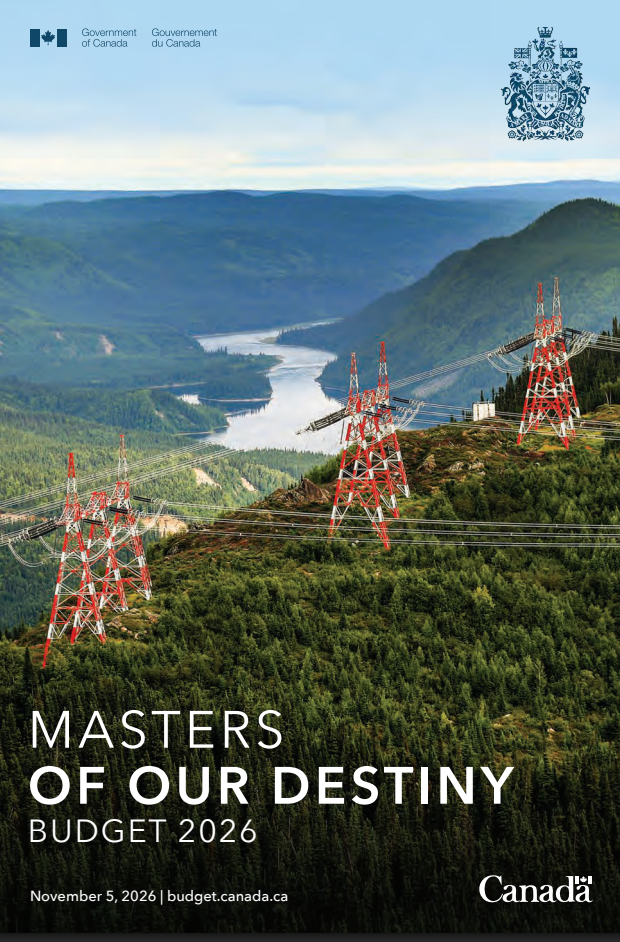
The federal government’s Budget 2026 proposes a new Canada Growth Incentive, a capital gains exemption of up to $15 million for founders, early employees, and investors in growing Canadian companies. While most capital gains exemptions limit each other, the budget carves out sales to Employee Ownership Trusts and worker co-operatives, so a seller could generally claim both on the same sale.
Just months after the EOT exemption was made permanent, this shows employee ownership is now treated as a lasting part of Canada’s tax landscape, with new policy being built to work alongside it. For the next generation of Canadian founders, selling to your employees isn’t a trade-off. It’s a path that keeps your business, and the wealth it creates, in Canada.
Events & Opportunities
Thank You: September 30 Webinar Recap
We wrapped our September 30 webinar on one of the questions we get asked most: what actually changes day-to-day once you become an EOT-owned company?
The short answer from Nikki Barrett, CEO of Grantbook, Canada’s first EOT: nothing, and then everything.
Nothing, because a well-prepared transition preserves what you built: the culture, the leadership team, the day-to-day work. Everything, because the moment all employees become beneficiaries together, there is a powerful aligning effect that simply was not there before.
Jennifer Williams of Ownership Design Group walked through what year one actually looks like: a planned pause right after closing, a period of figuring out how governance really works in practice, and then the sustained work of building and embedding an ownership culture.
A few things that landed:
- The transaction is the starting line, not the finish line. Closing the deal does not create an ownership culture. Education, two-way communication, and shared purpose need to be actively built and maintained every year.
- Clarity on who decides what is not optional. Trustees, the board, management, and employees all have distinct roles. If those boundaries are not clearly defined, people fill the gaps with their own assumptions, and conflict follows.
- Every leader needs to be able to explain the EOT in plain language, in under two minutes, with no jargon. If management cannot do that, employees will not understand it either.
And two years in at Grantbook: turnover is way down, employee net promoter score is way up.
If you missed it, the recording is available below.

Coming Up: November 17 Webinar
Selling Control to an EOT: What Owners Should Know About Governance
November 17, 2026 | 1:00 PM ET | Free
With the $10 million capital gains tax exemption on sales to Employee Ownership Trusts (EOTs) now permanent, more Canadian business owners are taking a serious look at EOTs as their succession path. And one of the first questions they ask is simple: once I sell, how much say do I still have?
Selling to an EOT gives you more influence over your company’s future than a sale to an outside buyer. But you are still selling a controlling stake, and that will mean the role you are used to playing will change in ways worth understanding at the outset.
In this session, Elizabeth Nolin, Director of EOT Design & Implementation at Rewrite Capital Advisors, will explore the key governance considerations for selling owners at the outset, so that you can plan a transition that works for you, your team, and the business you built. We’ll leave some time at the end for questions.
In this session, we will cover:
- The difference between owning, governing, running and benefitting in an EOT
- Your allowed level of participation at the trust and board level
- What that might look like if you sell 100%, 51%, or something in between
- What selling control actually means, and how to set realistic expectations for the transition
- Ways to stay involved after the sale
- The importance of having a strong management team, and more
Ideal for business owners exploring an EOT sale and the advisors who support them.

Business Transitions Forum: Cash Out or Partner Up?
November 18 | Vancouver, BC
Elizabeth Nolin, Director of EOT Design and Implementation at Rewrite Capital Advisors, will represent employee ownership on behalf of EOC on the panel Cash Out or Partner Up? Finding the Right Liquidity Strategy. The session explores the full range of exit options for owners, from strategic buyers and private equity to family succession and Employee Ownership Trusts. It’s a valuable session for business owners weighing their options and the advisors who support them.

Smith School of Business Webinar: The Psychology of Business Succession
Thursday, November 19 | 12:00 p.m. ET
Join Sarah Burrows for a 45-minute webinar on the human side of business succession. Drawing on the dynamics of family-owned businesses, the session looks at how owners, successors and employees can better navigate change during a transition.
FEATURE: Meet Kyle Shantz
Employee Ownership Canada’s new CEO
Employee Ownership Canada is pleased to welcome Kyle Shantz as our new Chief Executive Officer. Kyle was introduced at the 2026 Canadian Employee Ownership Conference in Vancouver and officially steps into the role in November.
The search was led by Emily Murgatroyd of BoldHouse Executive Search.
About Kyle
Kyle brings more than 15 years of experience in social enterprise, social finance and organizational leadership. His career has focused on developing new approaches to financing, ownership and economic participation that create value for businesses and the communities they serve.
As Managing Director of the Centre for Social Innovation, he helped pioneer the use of community bonds to finance social-purpose real estate. He also served as national Executive Lead at TechSoup Canada, then the second-largest program in TechSoup’s global network by revenue.

Kyle holds a Bachelor of Arts from Queen’s University and a Master of Science in Finance from SOAS, and is currently completing his dissertation for a master’s in sustainability at the University of Cambridge.
Why employee ownership
Kyle sees employee ownership as an opportunity for Canadian nation-building: keeping businesses in their communities, building household wealth, and giving more people a stake in Canada’s prosperity, all while preserving the value and legacy built by Canadian founders.
“Employee ownership is one of the most practical tools Canada has to keep businesses rooted in their communities and to share prosperity more broadly. With the capital gains exemption now permanent, we have a real opportunity to move employee ownership from a promising idea to a mainstream choice for Canadian business owners. I’m excited to work alongside our members, partners and advisors to make that happen.”
~ Kyle Shantz, CEO, Employee Ownership Canada
What’s ahead
With the EOT capital gains tax exemption now permanent, Kyle joins EOC at a pivotal moment. His focus in the role will include:
- Building awareness of employee ownership among business owners, advisors and the broader public as a credible succession option
- Expanding education and resources on employee ownership models, options and best practices, including what the permanent EOT tax exemption means for owners and their advisors
- Making the case for employee ownership as a driver of a stronger Canadian economy and greater economic sovereignty
- Strengthening what EOC offers to current and new members, so membership delivers more, and the employee ownership ecosystem continues to grow
Please join us in welcoming Kyle to Employee Ownership Canada.
EOC Community Voices
Guest article by Emily Murgatroyd
Ownership Shows Up in Who Stays
What employee ownership did for retention at Taproot
A few years ago, I led the search that brought Mike Fotheringham to Taproot Community Support Services as CEO, and I’ve partnered with them on some key hiring projects since. Mike recently took Taproot through its transition to employee ownership and it’s now the largest employee ownership trust in Canada.
Recently, he joked that I was basically out of a job and truthfully, I wasn’t mad at him for that.
He was talking about the impact that becoming employee-owned has had on Taproot’s ability to attract and keep good people. Since becoming 100% employee owned, he mentions a marked increase in the quality of candidates applying for every position and cover letters are highlighting the EOT as their main motivation for submitting an application.
As a recruiter, I find that a really compelling part of the employee ownership conversation, and the research backs it up.

People stay where they feel connected to their work. Gallup’s research on employee engagement has found for years that the most engaged teams have far lower turnover than the least engaged. People stay when they understand how the business is doing, have a say in how the work gets done, and can see how their effort makes a difference.
Ownership builds that connection into the structure. In an employee-owned company, people share in the results. The numbers are open. Decisions are explained. Effort turns into something people can see and share in. It’s hard to feel like a cog when you own part of the machine.
The numbers show it. In the US, a 2026 survey by the National Center for Employee Ownership found that employee-owned companies had a voluntary quit rate of 11%, compared with 26% across US companies. In the UK, a 2023 study by Ownership at Work and the Employee Ownership Association found that 83% of employee-owned businesses saw higher motivation after the transition, 73% saw higher job satisfaction, and they were five times less likely to make people redundant.
Canada is just getting started. The UK introduced employee ownership trusts in 2014. Today about 2,470 businesses employing roughly 358,000 people have made the move. Canada opened the same door in 2024, so we don’t have our own numbers yet, but Taproot is already showing what the research predicts.
For any organization, losing good people is expensive. Every departure means lost knowledge, a gap on the team and a search to fill it. Employee ownership is often described as a succession plan, a tax decision or a values statement. At Taproot, it has also turned out to be a retention strategy.
Ownership shows up in who stays.
***
Emily Murgatroyd is the founder of BoldHouse Executive Search in Vancouver. She led Employee Ownership Canada’s recent search for its new CEO.
Get Involved & Quick Links
Become an EOC Member
Membership gives you access to tools, insights, and a growing national network. A 3-month free trial is available.
